Moving to Jones County GA? A Buyer’s Guide to Daily Life
June 4, 2026
June 4, 2026
If you’re thinking about moving to Jones County, GA, you’re probably looking for a little more room to breathe without feeling cut off from everyday needs. That balance matters, especially when you want space, a manageable commute, and a community that still keeps you connected to Middle Georgia. In this guide, you’ll get a practical look at housing, land, commuting, utilities, and daily life so you can decide if Jones County fits your next move. Let’s dive in.
Jones County is in Middle Georgia, with Gray serving as the county seat. The county’s 2025 population estimate is 29,171, up from 28,347 in 2020, which points to steady growth without a high-density feel.
The county covers 393.94 square miles of land and has about 72 residents per square mile. That lower density helps explain why many buyers are drawn here for more space, larger lots, and a quieter setting.
Jones County is an owner-heavy market. Census data show that 83.6% of housing units are owner occupied, which can appeal to buyers who want a more established residential feel.
The median value of owner-occupied homes is $194,500. Median monthly owner costs with a mortgage are $1,483, which gives you a helpful starting point as you compare your budget to nearby Middle Georgia areas.
There are 12,110 housing units across the county. Because the county is spread out, the housing pattern tends to feel more lower-density and car-oriented than urban.
One of the biggest draws in Jones County is space. Beyond Gray, the county includes communities such as Haddock, Round Oak, Griswoldville, Wayside, Bradley, East Juliette, James, and Clinton.
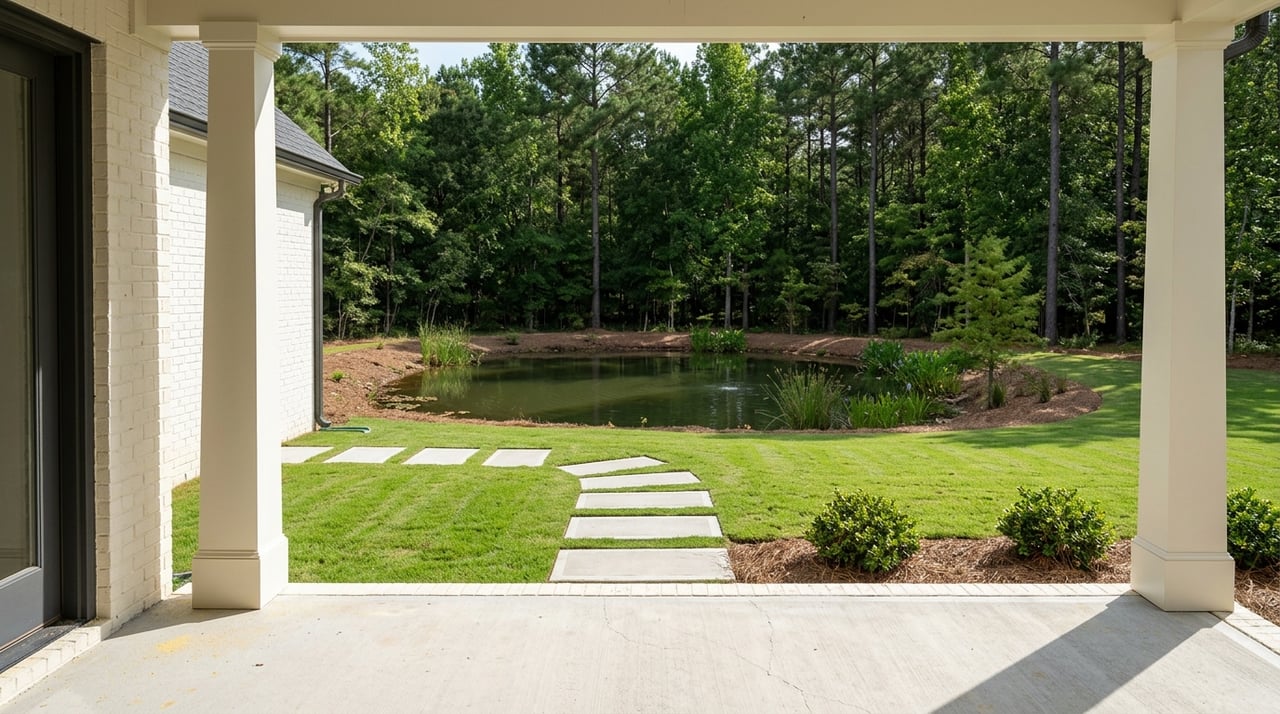
That broader layout means your home search may include everything from homes on neighborhood lots to properties with more acreage. If you want elbow room, privacy, or land for outdoor projects, Jones County may offer options that feel harder to find in more built-up areas.
The county also has a working-land backdrop. UGA Extension reports a 2025 farm gate value of $24,761,020, with broilers, beef cows, and timber among the top commodities, so some parts of the county are shaped by agriculture and timber rather than subdivision-style development.
If you move to Jones County, it helps to plan for a driving-based routine. The mean travel time to work is 29.8 minutes, which suggests commuting is a normal part of life for many residents.
That can work well if you need access to Macon or other Middle Georgia job centers. Exact drive times will depend on where you live in the county and where you work, but road access is part of what makes the area practical for people who want more space without giving up regional connections.
Jones County Transit also provides rural public transportation for residents in Gray and surrounding areas. The service is wheelchair accessible and available for shopping, recreation, employment, education, and medical needs.
Before you move, it helps to look beyond the house itself and think about daily convenience. Jones County’s directory lists a range of local services, including a library, health department, transit, water system, public works, sheriff, and multiple convenience centers.
The Jones County Public Library is part of the Middle Georgia Regional Library system and has served the county for more than 70 years. It offers internet-equipped public computers, free Wi-Fi, and digital borrowing through Hoopla and Libby, which can be useful when you’re settling in or just handling everyday tasks.
UGA Extension in Jones County is also based at the county government center in Gray. It provides research-based education in agriculture, the environment, communities, youth, and families, which can be especially helpful if you’re adjusting to gardening, land care, budgeting, or other hands-on aspects of rural property ownership.
If school access is part of your move, the Jones County School System reports 8 schools serving PreK through 12th grade, with more than 5,000 students and 300-plus educators. The district also notes that all schools receive Title I services.
The district announced centralized enrollment for students entering grades K-12 effective 3/16/26. If you’re relocating on a timeline, it’s smart to confirm the current enrollment process early so you know what documents and steps may be required.
Jones County can be appealing if you want land, but acreage comes with extra questions. Planning and Zoning serves both Jones County and the City of Gray and encourages property owners to consult early when planning future use.
Its services include building permits, zoning permits, land-disturbing permits, sign permits, stormwater management, floodplain management, building inspections, driveway permits, site plans, and rezoning and variance applications. For you as a buyer, that means it is wise to look at access, drainage, setbacks, and permit needs before you close, not after.
This matters even more if you hope to add a workshop, expand a driveway, clear land, or change how a property is used. A home with land can be a great fit, but the details matter.
Utility setup can vary from property to property in a county like Jones. Jones County Water Systems manages more than 200 miles of water mains and 60 miles of sewer pipelines and serves about 13,000 residents, but that does not mean every property has the same service connections.
Before you buy, confirm whether the property uses county water, county sewer, or another setup. That step can help you avoid surprises and better understand maintenance responsibilities, monthly costs, and any future improvement plans.
More land can be a major advantage, but it often comes with more hands-on care. Jones County operates nine manned convenience centers for solid-waste disposal, which supports the practical side of property maintenance.
If you buy a larger lot, you may need to think more about debris removal, yard waste, landscape upkeep, and general land management than you would on a smaller in-town lot. That does not make rural living harder for everyone, but it does mean your day-to-day responsibilities may look different.
Jones County may be a strong fit if you want a quieter setting, more elbow room, and a residential lifestyle that stays connected to Middle Georgia by road and county services. It can also make sense if you are comfortable with a commute and like the idea of a property that offers more flexibility than a tighter suburban lot.
It may be especially appealing if you are relocating and want a calmer pace while still keeping Gray, Macon, and other nearby areas within reach. For buyers used to frequent moves, that blend of space and access can be worth a close look.
The biggest tradeoff in Jones County is simple: more space often means more due diligence. Utilities, access, drainage, permits, and property upkeep can play a bigger role in your decision than they might in a more compact neighborhood.
That is why local guidance matters. When you know what questions to ask before you buy, you can move forward with a lot more confidence and a lot less stress.
If you’re considering a move to Jones County or anywhere in Middle Georgia, working with someone who understands relocation, local communities, and the practical side of homeownership can make the process easier. Reach out to Jacque Applegate for trusted guidance as you plan your next move.
Stay up to date on the latest real estate trends.



If you're planning to sell your home in the next few months, nothing is more important than knowing a fair asking price. I would love to help you with a FREE Market Analysis. I will use comparable sold listings to help you determine the accurate market value of your home.
GET IN TOUCH TO LEARN MORE

JACQUE APPLEGATE
1221 S HOUSTON LAKE RD WARNER ROBINS, GA 31088